
Heating Cables & Snow Guards in Maine: How to Stop Coastal Ice Dams and Deadly Roof Avalanches
Every winter from Kittery to Bar Harbor, Maine property owners face two severe cold-weather threats: massive ice dams forcing meltwater into drywall, and sudden multi-ton snow slides rocketing off slick metal roofs. Here is how modern heating cables and snow retention systems work together to protect your home.
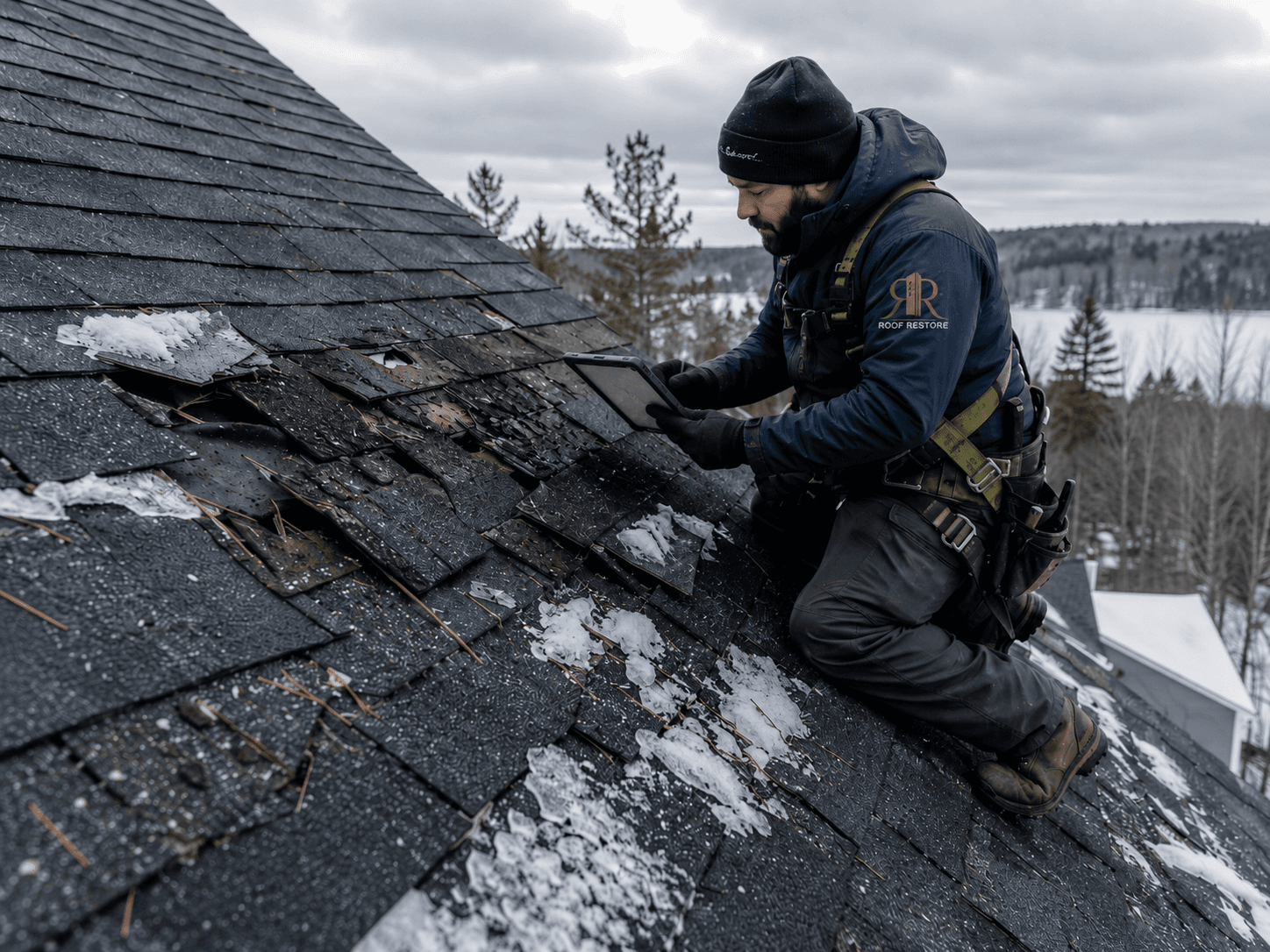
Engineered snow retention bars and commercial-grade self-regulating heat trace installed on a high-slope Maine coastal residence.
The Core Takeaway for Maine Roofs
What every property owner must know before December
They do NOT replace attic insulation or air sealing, but they create reliable melted drainage channels through frozen gutters and eaves so water never pools behind an ice dam.
Crucial on standing seam and metal roofs. They hold the snow blanket in place, allowing it to melt off gradually instead of shearing off in a 3,000-lb avalanche over walkways and decks.
1. Why Maine’s Coastal Microclimate Destroys Roof Eaves
Coastal Maine from Portland to Camden experiences a relentless cycle that inland regions rarely see: oscillating 30°F to 34°F daytime temperatures paired with damp Atlantic winds and sub-zero nighttime drops.
When daytime sun hits your roof, snow on the upper slopes melts. As that meltwater reaches the unheated roof overhang (the eave), it strikes freezing ambient air and refreezes into a solid ridge of ice. As the dam grows taller, meltwater pools behind it. Because asphalt shingles are designed to shed water downward by gravity—not hold standing ponds—the water pushes backward under the shingle laps, soaking roof sheathing, rotting fascia boards, and dripping into bedroom ceilings.
The Metal Roof Problem: Friction Loss & Avalanches
Metal roofs shed water brilliantly, but their smooth finish creates near-zero friction. When the bottom layer of snow melts against the metal during a sunny morning, the entire snow pack loses adhesion. Thousands of pounds of hard-packed snow slide instantly in a catastrophic roof avalanche, destroying gutters, crushing landscaping, snapping gas meters, and endangering people below.
2. Pad Guards vs. Continuous Pipe Systems: What Holds Maine Snow?
Not all snow guards can survive a Maine winter. Choosing the wrong style or improper spacing can lead to torn metal seams and sheared fasteners:
Individual Pad / Cleat Guards
Small triangular brackets fastened or clamped to seams in staggered rows.
- Best for: Lower slope roofs (under 6/12 pitch) and moderate snow load areas.
- Warning: Glued plastic pads routinely pop off during Maine freezes. Never use adhesive-only pads—always use non-penetrating seam clamps.
Continuous Pipe / Bar Systems
Heavy-gauge horizontal aluminum or steel pipes running uninterrupted along the eave line.
- Best for: Steep pitches (7/12+), commercial facilities, long roof runs, and entryways.
- Structural integrity: Distributes snow weight evenly across multiple standing seams without puncturing the roof membrane.
3. Self-Regulating Heat Trace vs. Cheap Constant-Wattage Heat Tape
Homeowners often buy $60 DIY heat tape rolls at big-box hardware stores, only to find them burned out or tripping circuit breakers by mid-January. Here is the technical difference:
| Feature | DIY Constant-Wattage Tape | Commercial Self-Regulating Cable |
|---|---|---|
| How It Operates | Fixed heat output (5W/ft) constantly, regardless of snow or ice presence | Conductive core increases heat when cold/icy; throttles down when mild |
| Cable Overlapping | Severe fire hazard (will overheat and melt) | 100% safe to overlap in valleys and gutters |
| UV & Cold Toughness | Thin PVC jacket cracks after 1-2 Maine freeze cycles | Fluoropolymer industrial outer jacket resistant to UV and ice abrasion |
| Expected Lifespan | 1 to 3 winters maximum | 10 to 15+ years |
4. The Engineering Layout: The Eave, Valley, and Downspout Formula
Simply laying a cable in a straight line does nothing. An effective ice dam mitigation system requires a calibrated geometric layout:
- 1. Eave Zig-Zag Triangles: The top peak of each cable loop must extend at least 12 inches past the interior wall plane into the heated roof zone. If the cable only touches the cold overhang, the ice dam simply moves 6 inches further up the roof.
- 2. Valley Tracing: Roof valleys channel snowmelt from massive surface areas. We run dual-cable loops 6 to 10 feet up every critical roof valley to keep the main drainage channel open.
- 3. Continuous Downspout Escape: Water melted on the roof must exit the building. Cables must trace through the gutter trough and loop down inside downspouts below the frost line to prevent frozen downspout plugs.
5. Costs vs. Payoff: Why Prevention Beats Emergency Steam Pumping
An emergency mid-winter call for steam ice dam removal in Maine costs between $500 and $850 per hour, with typical emergency visits exceeding $2,500. Add interior drywall repair, insulation replacement, and mold remediation, and an ice dam breach routinely tops $8,000 to $15,000.
By contrast, professional installation of commercial self-regulating heat trace and engineered snow retention on vulnerable eaves typically costs between $1,800 and $3,800 total, protecting your structure permanently for over a decade.
Get Your Eaves and Metal Roof Winter-Ready Before First Snow
Don’t wait for a 4-foot ice dam or a crushing snow slide. The Maine Roofing Scapes engineering team inspects roof pitch, heat loss zones, and gutter layouts to specify the exact system your building needs.
Frequently Asked Questions
Do heating cables prevent ice dams from forming in Maine?
Heating cables do not stop ice dams from forming, but high-grade self-regulating cables melt open drainage channels through the ice. This allows snowmelt to escape off the roof and through downspouts rather than backing up under your shingles and flooding your interior ceilings.
Are snow guards mandatory on metal roofs in Maine?
While not universally mandated by statewide residential code, snow guards are critically recommended by structural engineers over entryways, walkways, garage doors, HVAC units, and lower roof sections. Without snow guards, accumulated snow packs on slick metal roofs can suddenly release as multi-ton roof avalanches, crushing gutters, decks, and posing severe life-safety hazards.
What is the difference between cheap hardware store heat tape and self-regulating commercial cable?
Constant-wattage big-box heat tape outputs a fixed heat level regardless of ambient temperature, cannot overlap without melting, has a high failure rate within 1-2 seasons, and poses significant fire risks. Commercial self-regulating heat cable automatically adjusts its thermal output based on temperature (hotter when icy, idle when mild), can overlap safely, and lasts 10 to 15+ years.
How much does professional heating cable installation cost in Maine?
Professional commercial-grade self-regulating heat cable installation in Maine typically costs between $18 and $32 per linear foot, including roof clips, gutter traces, downspout runs, and electrical controller integration.